
Expert Picks For Essential Concrete Leveling Products
Find out which tools and supplies professionals recommend for achieving perfect concrete surfaces with ease.
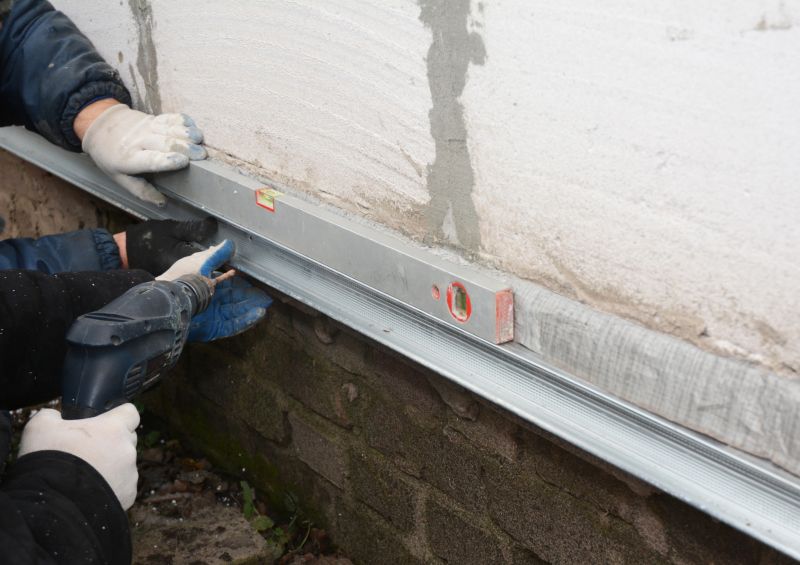 Concrete leveling is a practical solution for addressing uneven or sunken slabs around residential and commercial properties. When concrete surfaces develop cracks, slopes, or depressions, it can pose safety hazards and diminish curb appeal. Various products and techniques are available to restore the surface's integrity and appearance without the need for full replacement. These solutions typically involve specialized compounds, fillers, or mechanical adjustments designed to lift and stabilize the concrete.
Top Overall Option
Polyurethane Concrete Leveling Kit
A versatile polyurethane-based product that offers quick curing times and minimal surface disruption. Suitable for filling cracks, lifting slabs, and stabilizing uneven surfaces, it provides a durable and flexible repair option for various concrete issues.
Types of Products For Concrete Levelings
Polyurethane Foam
Lightweight, fast-curing foam used for lifting and stabilizing slabs, ideal for moderate to large repairs.
Hydraulic Cement
A quick-setting cement used for filling cracks and small depressions, offering strong adhesion and durability.
Self-Leveling Underlayment
A liquid compound that spreads evenly to create a smooth, level surface for flooring installation.
Polymer Mortar
A flexible, high-strength mortar suitable for patching and leveling uneven concrete areas.
Concrete Resurfacer
A thin overlay product that restores surface appearance and smoothness, often used for worn or spalled concrete.
Mudjacking Slurry
A mixture of cement, soil, and water used in traditional slab jacking to lift sunken concrete.
Epoxy Resin
Used for crack repair and surface bonding, providing a strong, durable fix for damaged areas.
Polyurea Joint Filler
Flexible filler for expansion joints, helping to prevent further cracking and shifting.
Liquid Cement Patch
Pre-mixed patching compound for small repairs and surface leveling.
Polymer-Modified Concrete
Enhanced concrete mix for improved adhesion and flexibility in leveling applications.
Grout for Concrete
Flowable grout used to fill voids and stabilize underlying soil before leveling.
Concrete Sealant
Protective coating that can help prevent further deterioration after leveling.
Rapid Set Cement
Fast-curing cement used for quick repairs and small-scale leveling projects.
Fiber Reinforced Overlay
A composite overlay that adds strength and crack resistance to leveled surfaces.
Polymer-Modified Overlay
A thin layer of polymer-enhanced concrete for surface smoothing and leveling.
Injection Grout
Used for filling voids beneath slabs to lift and stabilize concrete surfaces.
Polyurethane Crack Sealant
Flexible sealant designed to fill and seal surface cracks, preventing water infiltration.
Popular Choices
Widely used for its rapid expansion and ease of application, suitable for various slab sizes.
Commonly chosen for quick fixes and crack repairs due to its strong setting properties.
Popular for creating smooth, level surfaces before flooring installation.
Valued for its flexibility and bonding strength in patching applications.
Often used to restore worn or spalled concrete surfaces efficiently.
Traditional method still favored for larger, structural adjustments.
Chosen for crack repairs that require high bonding strength.
Popular for maintaining joint integrity and preventing further cracking.
Convenient for small surface repairs with quick setting times.
Preferred for its enhanced adhesion and flexibility in leveling projects.
Useful for filling voids beneath slabs before lifting.
Often applied after leveling to protect the surface.
Ideal for urgent repairs requiring quick curing.
Chosen for added crack resistance and surface durability.
Popular for creating smooth, durable surface finishes.
Effective for stabilizing and lifting sunken slabs.
Commonly used for sealing surface cracks and preventing water ingress.
For DIY enthusiasts and professional contractors alike, selecting the right products for concrete leveling depends on the specific condition of the slab, the underlying soil, and the desired longevity of the repair. Some products are formulated for small cracks and surface imperfections, while others are suited for larger depressions or structural issues. Proper application and adherence to manufacturer instructions are essential to achieve effective results.
In addition to the products themselves, it's important to consider the tools and accessories required for application. Many leveling compounds come in ready-to-use formulas, while others may require mixing or specific equipment such as pumps, drills, or trowels. Ensuring compatibility with the existing concrete and understanding the curing times can influence the overall success of the project. Whether tackling a minor unevenness or a significant sinking issue, the right products can facilitate a durable and aesthetically pleasing repair.
In the Largo, FL area, homeowners and contractors have access to a wide variety of concrete leveling solutions suited for different project sizes and budgets. Proper selection and application can help maintain the safety, functionality, and appearance of concrete surfaces for years to come. It is advisable to evaluate each product's specifications and reviews to determine the best fit for your specific needs.
Key Buying Considerations
- Determine the extent of the damage or unevenness to select the appropriate product type.
- Consider the size and depth of cracks or depressions for suitable repair materials.
- Check the curing time of the product to ensure it fits your project schedule.
- Evaluate the flexibility and adhesion properties, especially for slabs subject to movement.
- Assess whether the product is suitable for interior or exterior use based on exposure conditions.
- Review compatibility with existing concrete surfaces to prevent bonding issues.
- Consider ease of application, especially if DIY installation is intended.
- Look into the product’s durability and resistance to environmental factors such as moisture and temperature fluctuations.
- Verify if additional tools or equipment are needed for application and whether they are available locally.
- Examine manufacturer instructions for surface preparation and curing to ensure proper results.
- Assess the budget and compare the cost-effectiveness of different products for your project size.
- Research customer reviews and ratings for insights into real-world performance.
- Check for any safety precautions or protective gear required during application.
- Determine if the product can be used for both lifting and filling purposes or if separate products are needed.
- Consider long-term maintenance requirements after the repair is completed.
This page contains affiliate links; purchasing through these links may earn a commission at no additional cost to you. This helps support the maintenance and creation of helpful content.